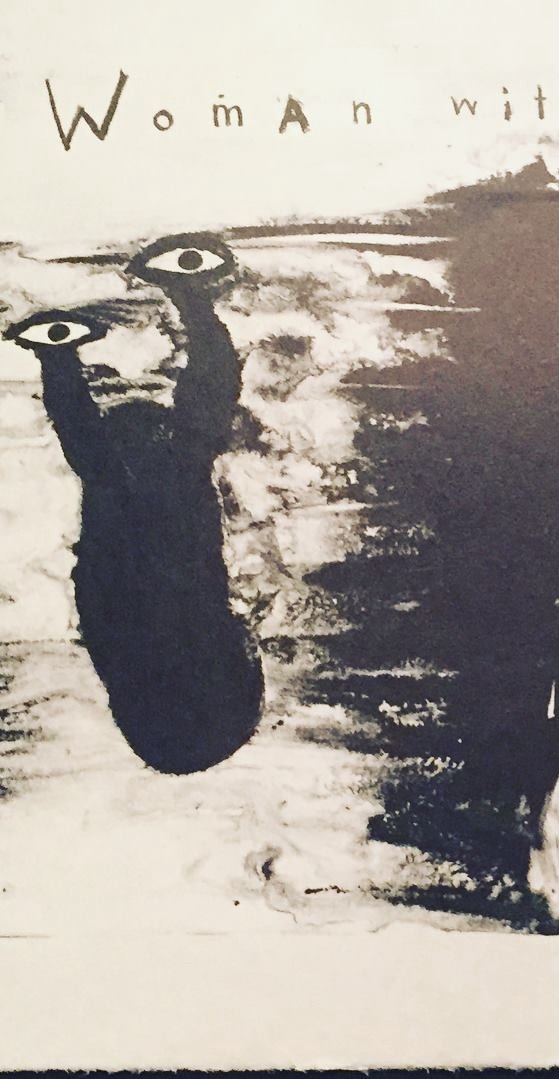
Korean/한국어: 쥐
I stole the rat from Annie because I was jealous of her deep oneness with her situation at the Retreat. I wanted to smash her serenity into a million pieces, the way a wretched beggar sees an impossibly opulent car parked on the street and throws a rock, hoping to leave a dent or scratch.
The rat’s name was Sam, and as I have never heard Annie refer to it with any particular pronoun, I decided that it was a girl because of its giant protruding stomach, possibly indicating pregnancy. I would have Googled it, but our phones were taken away from us and we were not allowed to access anything that connected us to the outside world.
I stood in my bathroom and stared at myself in the mirror. Sam was in the sink, meekly nibbling on a saltine cracker. Her fur was the same color as my hair: dark brown, almost black. Unlike my hair, Sam’s fur gleamed as if treated with some special conditioner.
I hadn’t showered in maybe three or four days. It was my own sad one-girl protest, against being committed to a holistic mental health center by the orphanage. I was a test subject for a university research project on alternative treatment strategies for foster youth with severe post-traumatic stress disorder.

My family’s drug store had been open for eight years, in a no-name suburb of New Jersey. When it first opened, my mother nursed my younger brother while checking over my daily English diary that she forced me to write to catch up to the other kids in my grade.
My dad just barely kept the pharmacy afloat despite his broken English and poor social skills. Most of the customers weren’t the type to look him in the eye. They shuffled in and out, rail-thin or swollen like misshapen balloons.
“This is American life,” I heard mom often muttering to herself under her breath. But I never once heard her say that she wanted to go back to Korea.
Then one day when I was fourteen years old, I saw my mom, dad, and younger brother get shot point-blank. I saw it all through the back window: a woman demanding her opioid medication refill on a counterfeit prescription.
I had gone out back to take out the trash and secretly smoke one of the cigarettes a customer had dropped on the floor on the way out. I heard a high-pitched woman’s voice, amplified by amphetamines.
“Motherf—er I said I want my PRESCRIPTION! I am in SO…MUCH…F—ING…PAIN!”
I heard the low murmur of my father’s voice, his tongue twisting as it tried to explain legalities and technical terms.
“NO, NO, NO. YOU DON’T GET TO DECIDE WHAT’S WHAT IN MY OWN GODDAMN F—IN’ COUNTRY, YOU F—IN’ CHINK.”
At this point, my mom got involved, her voice rising as sharply and loudly as the woman’s. My younger brother hid behind mom’s leg, eight years old and terrified.
Then, gunshots.
One.
Two.
Three.
Four.
I was frozen in place, my body and throat completely immobilized by shock. Somehow I had split into two and the second part of me had floated a full 5 meters above the whole scene like a puppet master looking down at her puppets.
The last gunshot was at the cash register. The woman ran off with two hundred and fifty three dollars, stuffed haphazardly in her bra and back pockets. She was found at her home later that day, a basement suite she shared with her eight-year-old son.
I remember the newspapers mentioning her son’s age, how he was now in the care of some estranged relatives in Florida. They mentioned how the woman was a full-time registered nurse at a local nursing home who had fallen into “hard times” when she injured her back in a minor car accident. They did not mention as much about us, the victims.
They did not mention that dad graduated from the top of his pharmacy class back in Korea, that my mom was an accomplished pianist, that my brother was also eight years old but would never grow up. Just like that, my family became a part of the bottomless melting pot of shooting victims in America.
And I was the odd one out, left to fend for myself.
I wish people would stop telling me to be grateful with that disgusting gleam in their eyes. They have no idea that I can see right through their fake-ass smiles and pantomimed sincerity. For the most part, they’re just glad that whatever happened to me didn’t happen to them.
The worst are the Christians. They live for this shit — that moment of glory when they can revel in their self-induced sense of moral superiority over wretched sinners like me who didn’t pray as hard.
I mean, maybe that’s all they have left. But still…come on.
Sometimes though, when I’m coming down from an especially bad manic episode from the never-ending psychoactive cocktails they keep forcing me to choke down every day, I have to admit that I envy their simple worldview. That whole us-versus-them thing really does make you feel warm and included.
And as much as I hate to admit, not all Christians are hypocritical assholes. Many, but not all.
I was put in the care of the state. I lived in an orphanage operated by a local Korean church for a year. Then, I signed all of the papers for the Retreat, not knowing what I was getting myself into.
I mean, I didn’t really have anywhere to go. By this point, “home” just became whichever social service agency had the space and staff capacity to take on the burden of maintaining my questionable existence.

Annie had been at the Retreat for at least a year before I had arrived. She was like me, an orphan. But she was from out of state, California or something. She looked like an angel, blonde hair with blue-green eyes. I wanted to be her friend but she was so fragile as to seem unapproachable. The only time she spoke were to the counsellors, the staff, and her rat.
No one knew where the rat came from, but it was rumored that she found it in the forest. You could often see her sitting on her wheelchair at the edge of the koi pond with Sam on her lap.
Annie had been born with a genetic condition that caused one of her legs to be underdeveloped, lacking adequate muscle and bone density. She had also been repeatedly raped by her foster father since she was six years old.
On the scale of human suffering, I calculated that she had gotten a worse deal. We were both sixteen, but Annie seemed to have transcended her suffering. I longed to know her secret, with an obsessiveness that edged on madness. I was mad enough to think that maybe the rat was the source of her will to get up in the morning, brush her hair, and smile– the way Samson’s hair was to his physical strength.
I looked dully into my eyes and puffy face reflected in the mirror. I considered my options for what I could do with this possibly pregnant rat. I had stolen Sam in the most outrageous manner. I had set the greenhouse of seasonal vegetables on fire with a match I had found in the trashcan in the visitor’s lobby. Then, when everyone was in a panic, I had snuck into Annie’s room and kidnapped the rat, which had been sleeping peacefully in a small shoe box she had filled lovingly with soft socks.
I stroked the water tap handles, considering my options. I could return Sam after a few days, after letting Annie suffer with the agony of loss, grief, and the unresolved question of who would do this to her. I could let Sam go free, releasing her into the forest that surrounded the Retreat.
Or, I could drown Sam and put her dead body back inside the shoe box in Annie’s room.
The last thought, terrible as it was, made my breath catch with excitement.
Some thoughts of reproach played through my mind. They were in the matter-of-fact baritone voice of Father Kim from the orphanage.
“God gave you a healthy and able body. Annie is trapped in a wheelchair for the rest of her life. Shame on you. Put the rat back.”
My breathing slowed as I considered the moral implications of my actions.
“Goddamn you, Father Kim,” I muttered to myself.
I played with the tap handle again, wondering whether rats could be waterboarded.
Whenever I couldn’t decide what to do, I drew pictures. I went into my dresser drawer and took out my black sketchpad and a soft pencil. I couldn’t go as far as torturing an innocent pregnant rat, but I could draw myself a comic where it happened. I often resolved my moral dilemmas this way.
Sam had finished her cracker and was now on her hind legs, sniffing the air.
I set the pencil to paper and began to sketch.
postscript
I felt that this young woman, Ella, channels the vulnerable energy I was trying to convey through the narrator. And of course, I highly recommend you listen to her story. It made me reflect on my own journey in navigating cultures and fractured identities.
