Korean/한국어: 멋진 사기다
Preface
“Die Feuerzangenbowle” (1944) was one of the most beloved comedies of Nazi Germany. It was released in January 1944 at the tail end of World War II as morale was at rock bottom in the crumbling Third Reich.
While the regime waged total war, audiences gathered around the cinematic punchbowl: laughing at school pranks, quoting lines, warming themselves on nostalgia.
Authoritarian systems survive not only on fear, but on comfort. On shared jokes. On the “idk lol” of it all.
The question isn’t whether tradition is evil; it’s whether we’re paying attention while we’re laughing.
This, this, Octavio, was no hero’s deed
‘Twas not thy prudence that did conquer mine;
A bad heart triumphed o’er an honest one.
No shield received the assassin stroke; thou plungest
Thy weapon on an unprotected breast—
Against such weapons I am but a child.— Friedrich Schiller, The Death of Wallenstein, trans. S.T. Coleridge, Project Gutenberg, 1999 edition.
Who will be the American Pfeiffer?
Who will be the unlucky one left standing
once all the others have been silenced or disappeared
and the only heroism left
is speaking in code?
Deutsch liegt mir nicht
German is not for me
says the writer from Berlin, playing the class clown.
Who will play the class clown from New York?
Who will be the American Rosen?
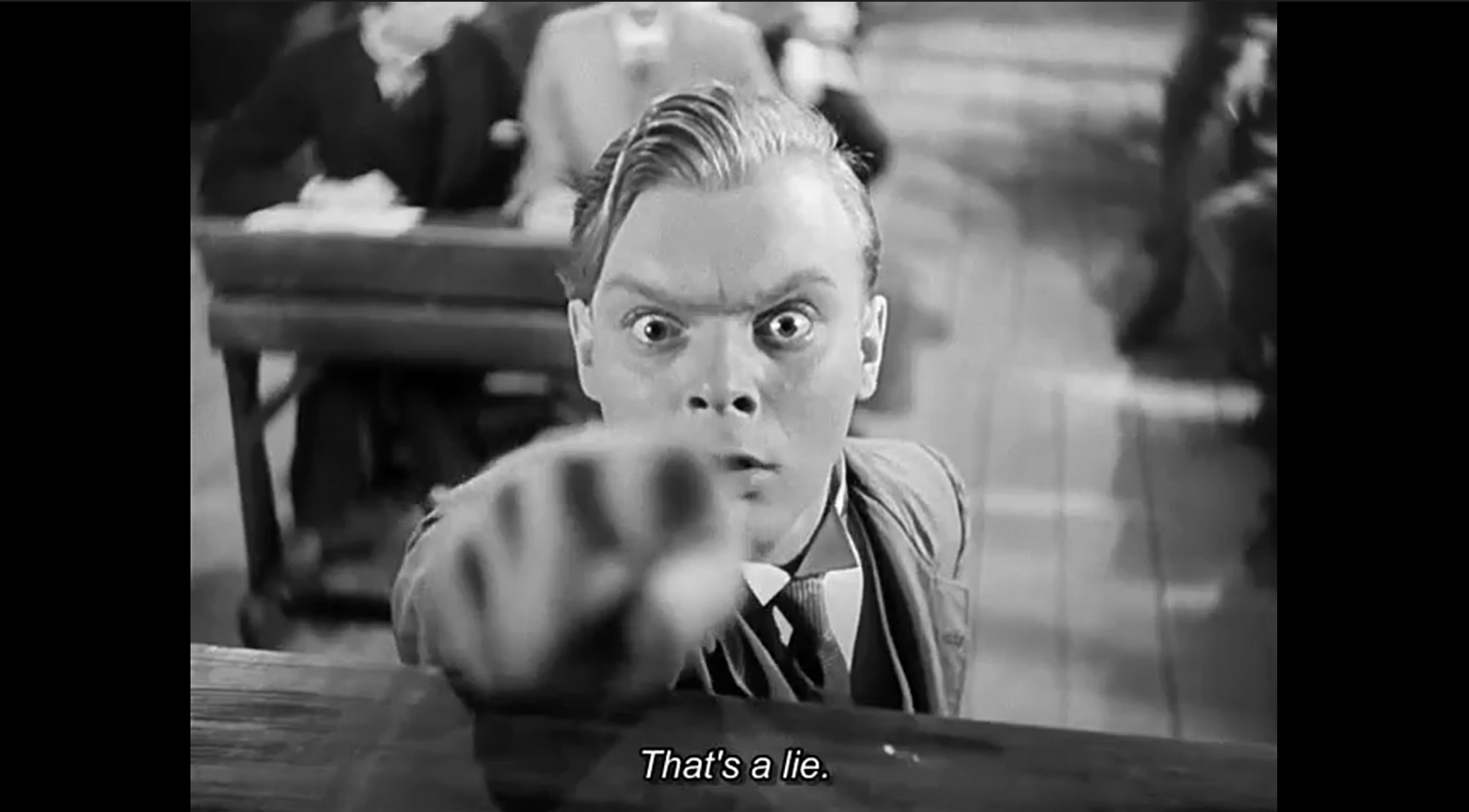
When he raises his finger at the Teacher
and declares what we all know to be true?
Das ist Schwindel!
Das ist Schwindel!
That’s a lie!
It’s a con!
How many corpses
How many horrors
How many generations
before it’s safe for the kids
to play ironically at Christmastime?


postscript 1
“This, this, Octavio, was no hero’s deed.”
Professor Crey (Erich Ponto) quotes Friedrich Schiller to writer-turned-undercover-student Hans Pfeiffer (Heinz Rühmann) after Rosen is ordered to sit down.
The rest of that quote, abridged:
“’Twas not thy prudence that did conquer mine;
A bad heart triumphed o’er an honest one.
…
Against such weapons I am but a child.”— Friedrich Schiller, The Death of Wallenstein, trans. S.T. Coleridge, Project Gutenberg, 1999 edition.
postscript 2
I am by no means an expert on German literature nor a native speaker of German— I can only claim some partial insight through my partner, a native speaker. As a translator, however, I’ve always struggled with the burden of faithfully and skillfully conveying the original author’s intent when confronted with certain cultural elements that seem untranslatable. Therefore for any overthinking bilingual speakers of German and English, I leave here the original passage for your assessment:
Das war kein Heldenstück, Octavio!
Nicht deine Klugheit siegte über meine, Dein schlechtes Herz hat über mein gerades Den schändlichen Triumph davongetragen. Kein Schild fing deinen Mordstreich auf, du führtest Ihn ruchlos auf die unbeschützte Brust, Ein Kind nur bin ich gegen solche Waffen.
— Friedrich Schiller, Wallensteins Tod, Project Gutenberg, 2004 edition.
postscript 3
Despite missing the crucial final monologue by the protagonist Dr. Johannes Pfeiffer, this version does contain the crucial scene in which Rosen attempts an act of failed heroism (click below; the video starts at 50:52).