Korean/한국어: 왜 나는 읽는가
“We turn to literature to understand ourselves and others, across boundaries of time, space, and culture. When fictional characters reveal the whole, unvarnished truth of their lives, it can be a mirror to our own.”1
I remember typing out those words on a miserably cold day in February three years ago.
I was 34 years old and completely lost.
This feeling of sheer terror and confusion was what always propelled me toward books as a refuge from the grotesque spectacle of the world. And the older I get, the more I wish I could unhear, unsee, and unfeel. Unfortunately, that’s not how it goes.
In one of my short stories, the narrator observes that life is a cruel lottery in a lot of ways.2 This is true. Among many mixed blessings, I was born with an extremely competent-looking face, along with a pathological need to live up to the expectations it inspired. It’s the kind of face that gives people the impression that I know what the f— is going on.3
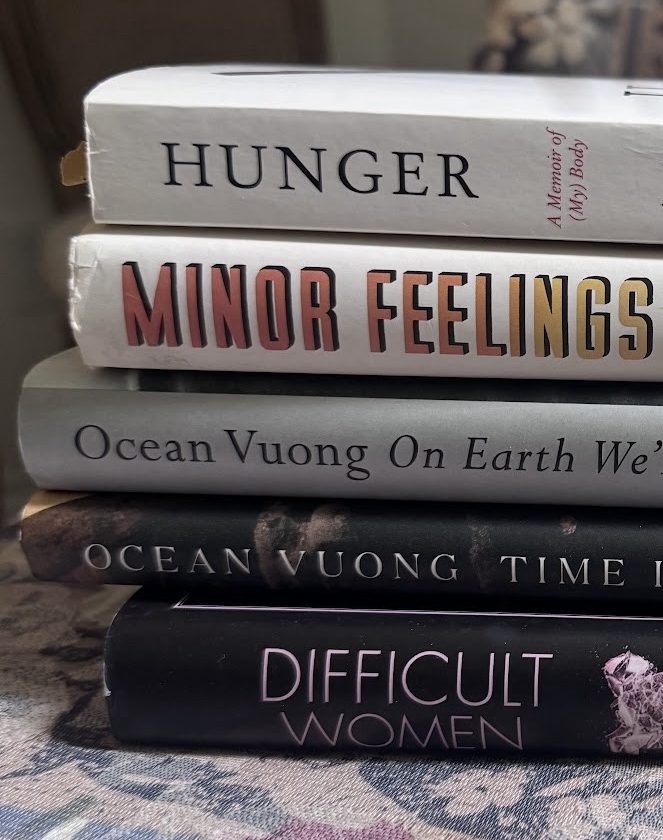
It took me a very long time to figure out that people like me— average yet deeply insecure— get used up and spat out, unless I learned to stand up for myself. Reading books by Korean women helped tremendously in this regard.
In fact, reading books saved my life.
Books written by imperfect humans who, even after witnessing all of the ugliness – both within oneself and in the world — nevertheless took a giant leap of faith into the great unknown of creation. They did this with the wild hope of connection. Some resonated within their lifetimes; others took time.4
Just as for writing, I read for purely selfish reasons. I read to find answers to the two questions that I’ve been trying to answer my whole life ever since I gained consciousness. Who am I, and why am I here?
I still haven’t found the answers, but this doesn’t bother me as much as it used to.
The fact that I am no longer wasting time on anyone or anything that doesn’t serve my journey to answer them is enough to keep me going.
To be continued.

postscript 1
I watched the sublime Train Dreams directed by Clint Bentley last night, and cried harder than I had in a long time. It brought to mind Lee Chang-dong’s Peppermint Candy in its unflinching depiction of a man’s spiritual journey through life against the background of seismic economic, technological, social, and cultural changes.
postscript 2
I’ve been an on-again, off-again follower of Mina since 2023, as I find her book picks very relatable (I actually read Four Thousand Weeks last year, discovered thanks to Cal Newport’s excellent podcast Deep Questions). I can’t speak for all of her content— as I am a mere mortal with approximately 4,000 weeks to live 🥹— but this one hit the nail. 🔨 We need more sassy guides for Gen Z like this, to deconstruct just how full of 🤡 the world is.
postscript 3
- “[Book Review] In ‘Future of Silence,’ Korean women’s voices resound across generations.” The Korea Herald, pub. February 24, 2022. ↩︎
- “Fat-Ugly Weird, 15-1″ ↩︎
- But seriously, I don’t. Refer to previous paragraph. ↩︎
- Learning to assign real time, effort, and value to one’s creative pursuits, independent of the economic and social reality of the times is another great mental feat that goes mostly unseen. More on this later, when I write about why I write. ↩︎